Pipe break repair in Maryville, Tennessee
Pipe Break Repair in Maryville, TN: Burst, Frozen and Broken Water Lines
A burst pipe, a frozen line or a wet spot in the yard needs the same first move: stop the water. This page covers that first step, how to tell where the break is, and the decisions that follow.
Water Is Spraying or Flooding: The First Five Minutes
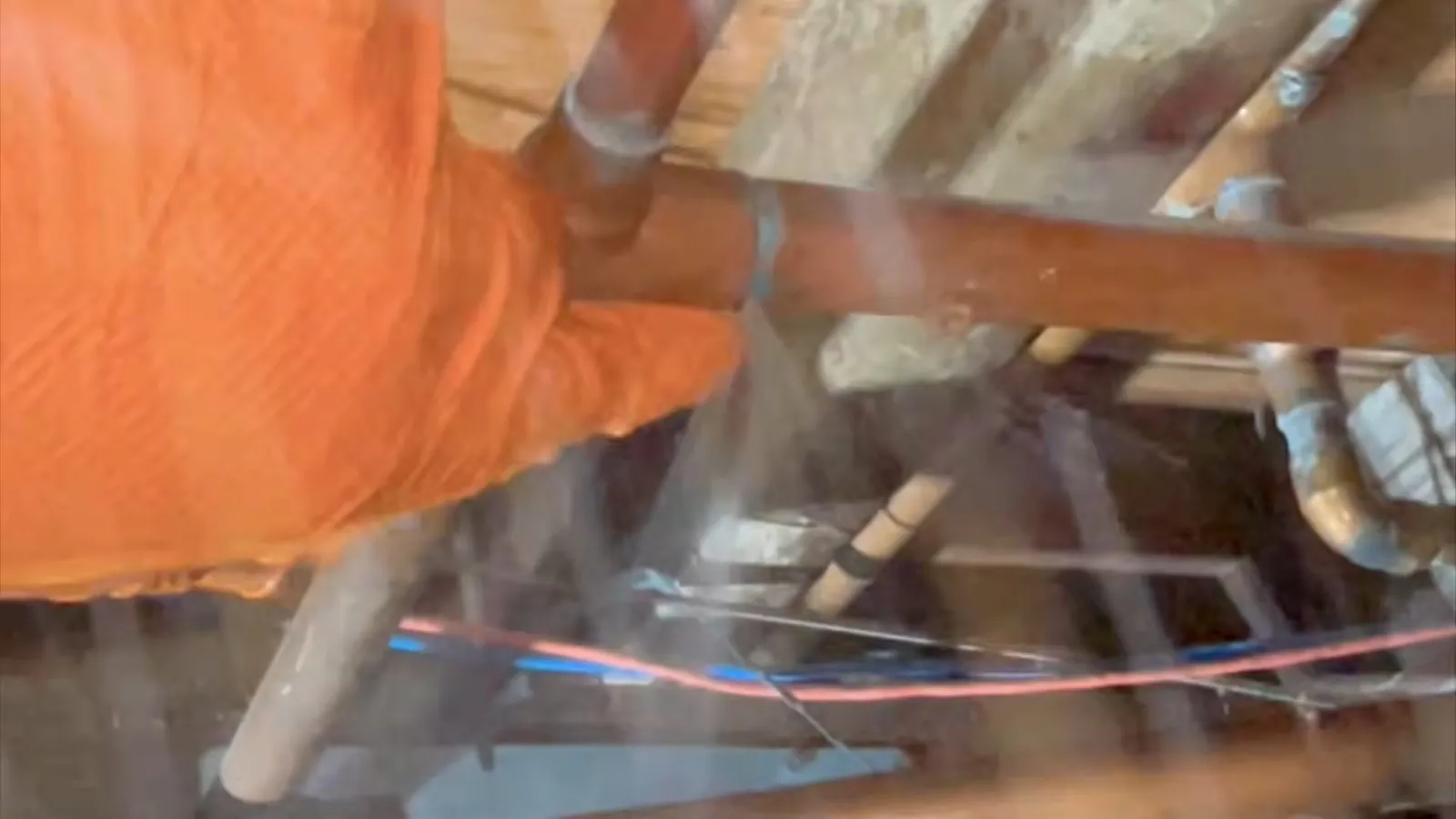
- Close the main shutoff valve.It is usually where the water line enters the house. Turn it fully closed.
- Stay away from electricity.If water is reaching outlets, appliances or the panel, do not touch them. Leave that area and tell the plumber.
- Open a faucet on the lowest floor.It drains the water still in the pipes and relieves pressure at the break.
- Photograph the break and the damage.Pictures help the repair and any insurance claim.
- Call and describe it.Say where the water is, whether it has stopped, and where your main valve is.
Closing the main stops the flow. It does not find the break, which is the next decision.
Call and describe what you see.
Call (833) 840-2034Find the Break, or Call Someone Who Can
Some breaks are obvious, such as a split pipe under a sink or in a crawlspace. Others hide in a wall, under a floor or in the yard.
- Visible break: note where it is and whether the pipe is copper, plastic or steel.
- Wet wall, damp ceiling or sound of running water: the break is inside the structure. Closing the main stops it, and finding it takes testing.
- Soggy lawn or a wet strip near the foundation: the break may be in the water line. See the water line section below.
If the water stopped when you closed the main but you cannot see where it went, tracing it takes equipment, not guessing. That work is covered under tracing a concealed leak.
Frozen Pipes: Thaw, Wait or Call
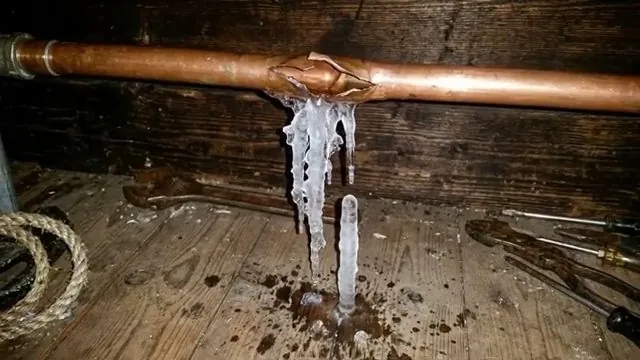
Pipes freeze where they are exposed: in garages, crawlspaces, exterior walls and outdoor hose connections. A frozen pipe is not always a broken one, but it can split as it thaws.
- Open the faucet the frozen pipe feeds, then add gentle warmth with a hair dryer or a heater placed safely nearby.
- Never use an open flame.
- If the pipe is split, you will see water as it thaws. Close the main and call.
- If you cannot find the frozen section, or no water comes at all, call.
Maryville's local building-code modifications use a frost depth of 12 inches. That tells you freezing risk is strongest in shallow or exposed pipe, not buried deep, so check unheated spaces and outdoor connections first.
Source: City of Maryville local modifications to the IRC (the 2018 edition; the City adopted the 2024 codes effective January 1, 2026).
Water Line Repair: From the Meter to Your House
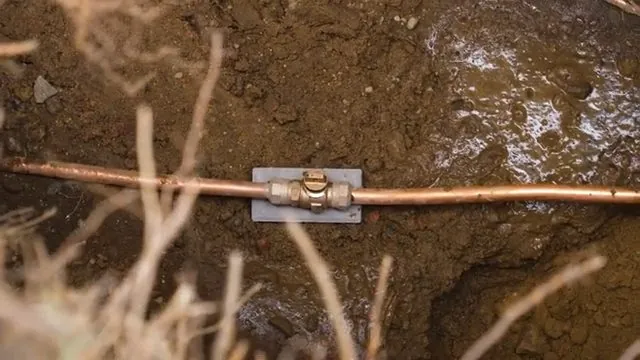
The line that carries water from the street to your house is where many "pipe break" calls end up. Maryville's Water and Sewer rules define the customer's water line as the pipe from the water meter to the building.
That gives you a first question: is the wet spot at or before the meter, or between the meter and the house? A wet spot at or before the meter is a call to the City. Between the meter and the house, it is the part the rules call the customer's line.
To check, read the meter when nothing in the house uses water, wait a few minutes, and read it again. If it moved, there is a leak on your side. The test confirms a leak, not its location.
Source: City of Maryville Water and Sewer Rules (2019 edition), section 2.0 definitions. The rules do not settle who pays for a repair, so confirm with the City.
Digging for a water line repair
A repair that opens the yard needs a utility locate first. Tennessee 811 asks for notice at least 3 and no more than 10 working days before digging. Ask the plumber who calls 811 and whether a permit applies.
Source: Tennessee 811 damage prevention FAQs.
Trenchless Water Line Replacement, Pressure Testing and Low Pressure
Some service lines can be replaced by pulling a new pipe along the old path from small access pits, which disturbs less of the yard than a long trench. Whether it works depends on the old pipe, its depth and the soil, so ask the plumber to explain why a trenchless method fits or does not.
After any repair, ask whether the new section will be pressure tested before the trench is closed. A test that holds pressure is the plumber's evidence that the repair did not leave a leak behind.
Low pressure through the whole house can come from a leak, a partly closed valve or a problem on the supply side. A meter that moves with every fixture off points to a leak, which the leak detection page explains how to chase.
Spot Repair or Replace the Section: Questions to Ask
- Is the damaged piece a short section, or is the pipe old and brittle for a long run?
- What material is the pipe, and what will the new piece be?
- Could a second break appear next to the repair?
- Does the quote include the permit, the 811 call and restoring the surface?
One break on a sound pipe points to a spot repair. Repeated breaks on the same line point to replacing a longer run. For supply pipe inside the house that keeps failing, see replacing failing supply pipe.
Call and describe what you see.
Call (833) 840-2034Know the Pipe Material Before the Repair
The repair method depends on what the pipe is made of. Copper is soldered or joined with fittings, plastic pipes use their own connectors, and galvanized steel is threaded and rusts from the inside.
Tell the plumber what you see, and ask them to name the material in the quote. A mix of materials, or a pipe that is corroded along its length, is a sign that the next failure may not be far away.
Ask whether the line will be pressure-tested after the repair and before any wall or yard is closed. A test is how you know the repair holds.
After the Water Stops: Damage, Insurance and Drying
Once the flow is stopped and the pipe is fixed, the water that already escaped still has to be removed and the area dried. Wet drywall and insulation do not dry on their own.
Cleanup after a burst is covered under water damage restoration, and it is separate from the repair.
The City states that flooding is not covered by a homeowner's policy and offers a flood-zone lookup by address. A burst pipe is a different event from a flood, so ask your insurer how a pipe break is treated under your policy and what documentation it wants.
Source: City of Maryville flooding and floodplain information.
Which Pipe Break Problems Belong to the City, Atmos or Others
- The City: the main in the street and the meter.
- Atmos Energy: a smell of gas near a break in a trench. Leave, call 911, then call 866-322-8667.
- An electrician: any outlet or panel that got wet.
- Your landlord or HOA: if you rent or share a building line.
- A slab leak: a break under a concrete floor has its own page, a leak under the slab.
Urgent Pipe Breaks Versus Ones You Can Schedule
| Stop everything and call | Can be scheduled |
|---|---|
| Water is flowing and you cannot stop it | A frozen pipe that thawed with no leak |
| A pipe split after a freeze | A pipe that was repaired and is dry |
| Water is soaking a wall, floor or ceiling | A slow drip you have shut off at a stop valve |
| The meter runs with every fixture off | A hose bib that leaks only when open |
Closing the main is the safest first move. Then call and say where the water is.
Water Stopped or Still Running? Call Now
Close the main valve if you can, then describe where the water is and whether it has stopped.
Call (833) 840-2034