
Garbage disposal repair in Maryville, Tennessee
Garbage Disposal Repair in Maryville, TN: Jams, Humming and Leaks Under the Sink
A disposal that hums, stays silent or drips under the sink usually falls into a handful of cases. This page helps you sort them, do the safe checks and know when replacement is the better call.
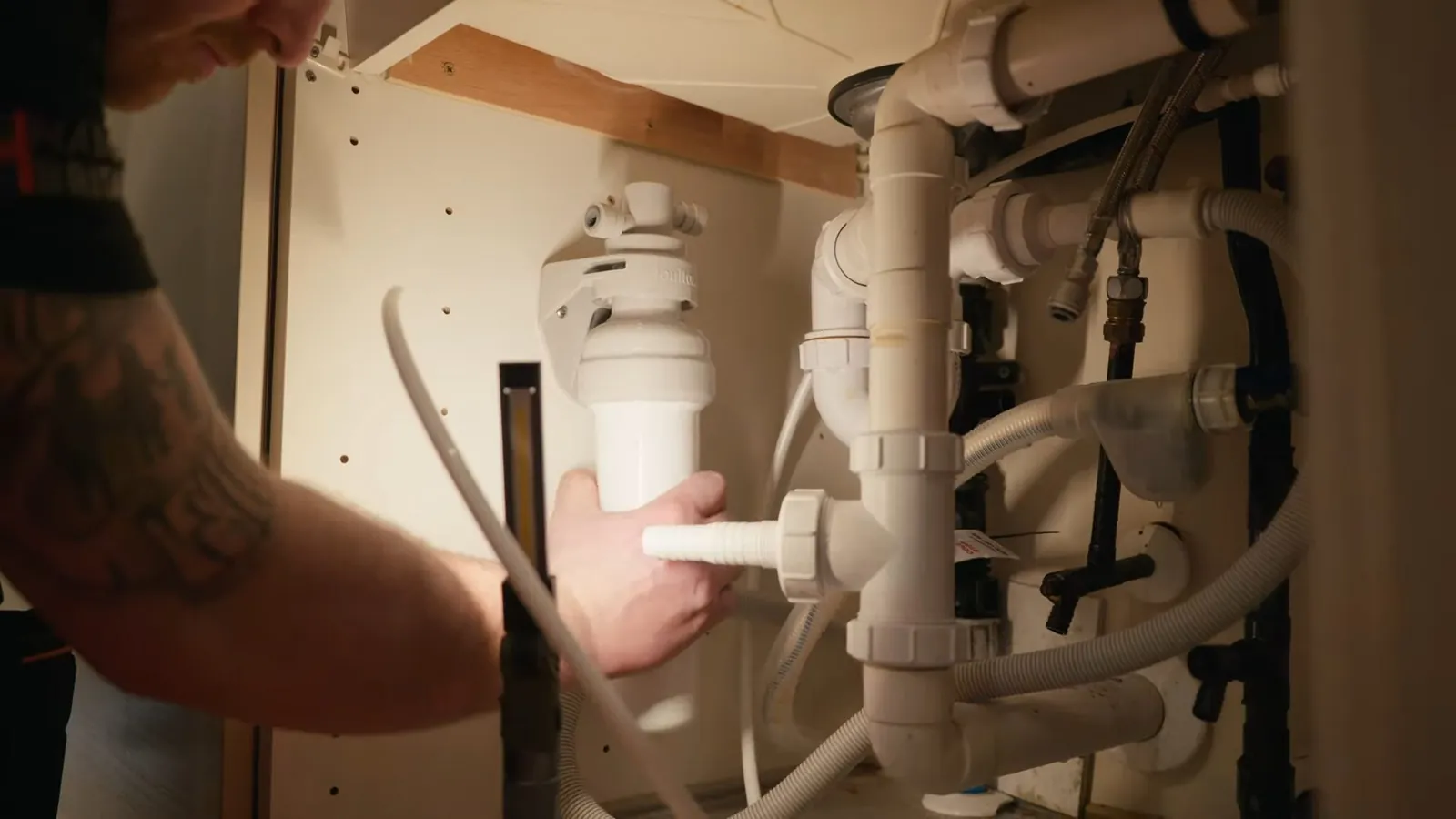
Hum, Silence or Leak: Sort the Symptom First
| What it does | Usually means | Repair or replace |
|---|---|---|
| Hums but the blades do not turn | Something is jammed against the blades | Usually repairable |
| Silent, no hum | No power: the reset button, a tripped breaker or a switch | Often a simple fix |
| Runs but drains slowly | A partial clog in the unit or the drain line | Clear the clog |
| Water under the sink | A leak at a seal, a connection or the housing | Depends where it is |
| Loud grinding or rattling with nothing in it | Worn parts or a loose piece | Often replacement |
Most disposal problems fall into one of those rows. The row tells you which of the sections below to read.
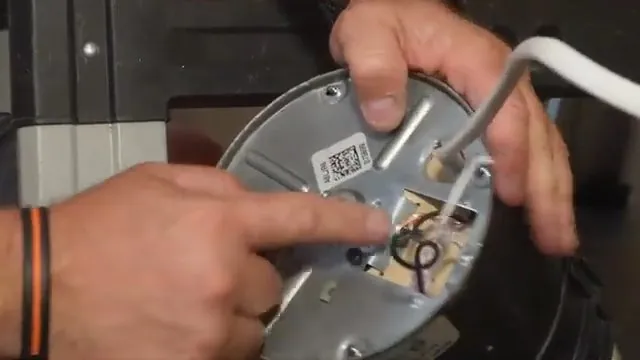
Disposal Safety: Power Off and Tongs Instead of Fingers
- Turn the disposal switch off, then unplug it or switch off its breaker.
- Never put a hand into the disposal, even when it is off.
- Use tongs, pliers or a wooden spoon handle to remove anything you can see.
- Keep the area dry before you reach for the plug.
Power off and unplugged is the rule for every check below. A disposal that restarts while a hand is inside causes serious injury.
Call and describe what you see.
Call (833) 840-2034Clearing a Jam That Hums
- Cut the power.Switch it off and unplug it.
- Look down the drain with a flashlight.Remove a visible object with tongs, never fingers.
- Turn the blades by hand.Many disposals have a socket at the bottom for a hex key. Working it back and forth frees the blades.
- Press the reset button.It is a small button on the underside of the unit. Wait a few minutes after a trip before pressing it.
- Restore power and test with water running.If it hums again, stop and call.
A jam that clears and comes back points to something stuck in the line or a worn part. That is a plumber visit, not another round of resetting.
Disposal With No Power: Switch, Reset Button and Breaker
A silent disposal is often a power issue. Check the wall switch, then the reset button, then the breaker.
A disposal that trips its breaker again is a wiring or motor question. Leave it off and ask the plumber or an electrician. Repeated resets cost you the motor.
Finding Where the Water Is Coming From
A leak under the sink is the most common reason for a disposal visit. Dry the unit and the pipes with a towel, put paper under them, then run water and watch.
| Where the water shows | Likely source | Typical fix |
|---|---|---|
| At the top where the unit meets the sink | The sink flange seal or mounting | Reseat the mount, replace the seal |
| At the dishwasher hose | A loose clamp or a cracked hose | Tighten or replace the hose |
| At the drain pipe on the side | A loose or cracked connection | Re-seal or replace the fitting |
| From the body or underside of the unit | A cracked housing or failed seal | Replace the disposal |
A leak from the body of the unit is the one result that sends you to replacement. A housing cannot be patched. The other three rows are connection fixes.
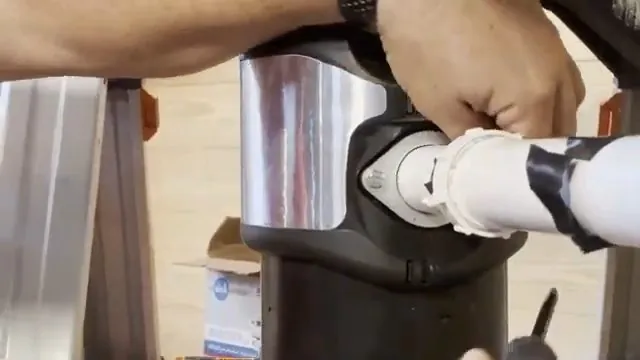
Repair or Replace a Garbage Disposal
- How old is it? The label or a stamp on the unit tells you the model and sometimes the date.
- Is the housing leaking? If so, replace it.
- Has the motor been reset repeatedly? A motor that keeps tripping is wearing out.
- Does it grind well? A unit that runs but does not clear food is losing its edge.
- Is the quote in writing? It should name the part and the labor.
A young unit with a failed seal is a repair bet. An old unit with a tripped motor is a replacement candidate. Ask the plumber to say which one yours is, and why.
Call and describe what you see.
Call (833) 840-2034When the Sink Is Slow, Not the Disposal
A slow sink is not always the unit. If the disposal runs freely and water still drains slowly, the clog may be in the pipe past it.
Standing water in both sink basins, or gurgling at the other side of the kitchen, points to a clog in the line beyond the disposal. See a clogged line past the disposal for how that is cleared.
A disposal that is replaced into a blocked line will back up again, so ask the plumber to check the drain before leaving.
The Fixtures Around the Disposal
The disposal sits beside the faucet, the supply valves and the drain trap. A drip from any of those looks like a disposal leak until you check.
If the faucet or its supply lines are the source, sink fixtures and supply lines covers how those are repaired. Fix the right part, because a new disposal will not stop a dripping faucet.
What Wears Out a Disposal
- Grease, which coats the blades and hardens in the pipe.
- Fibrous food such as celery or corn husks, which wraps around the blades.
- Bones, fruit pits and hard shells, which can dull or jam them.
- Running the unit with no water, which overheats it.
- Pushing food in too fast, which stalls the motor.
Run cold water before, during and for a short time after each use. It moves waste through the pipe.
What to Do About Water in the Cabinet
A slow leak under a disposal can soak the cabinet floor. Take everything out, dry the area and check for soft or swollen wood.
If the cabinet or the wall behind it stays wet, or a leak ran for some time before you noticed, drying a wet cabinet and wall is a separate job from the repair.
Questions to Ask the Plumber
- What failed, and can I see the part?
- Is repair or replacement the better choice, and why?
- Will you test for leaks with the water running?
- Will you check the drain past the disposal before you leave?
- Is the work and the part covered by a warranty, and for how long?
Disposal Humming or Leaking? Call and Describe It
Say what it does, where the water shows and your ZIP code.
Call (833) 840-2034