Tankless water heaters in Maryville, Tennessee
Tankless Water Heater Services in Maryville, TN: Installation, Descaling and Repair
A tankless heater removes the storage tank but asks more of your gas line, vent or electrical panel. This page lays out what to check before choosing one and what upkeep to expect.
Is a Tankless Heater Right for Your House?
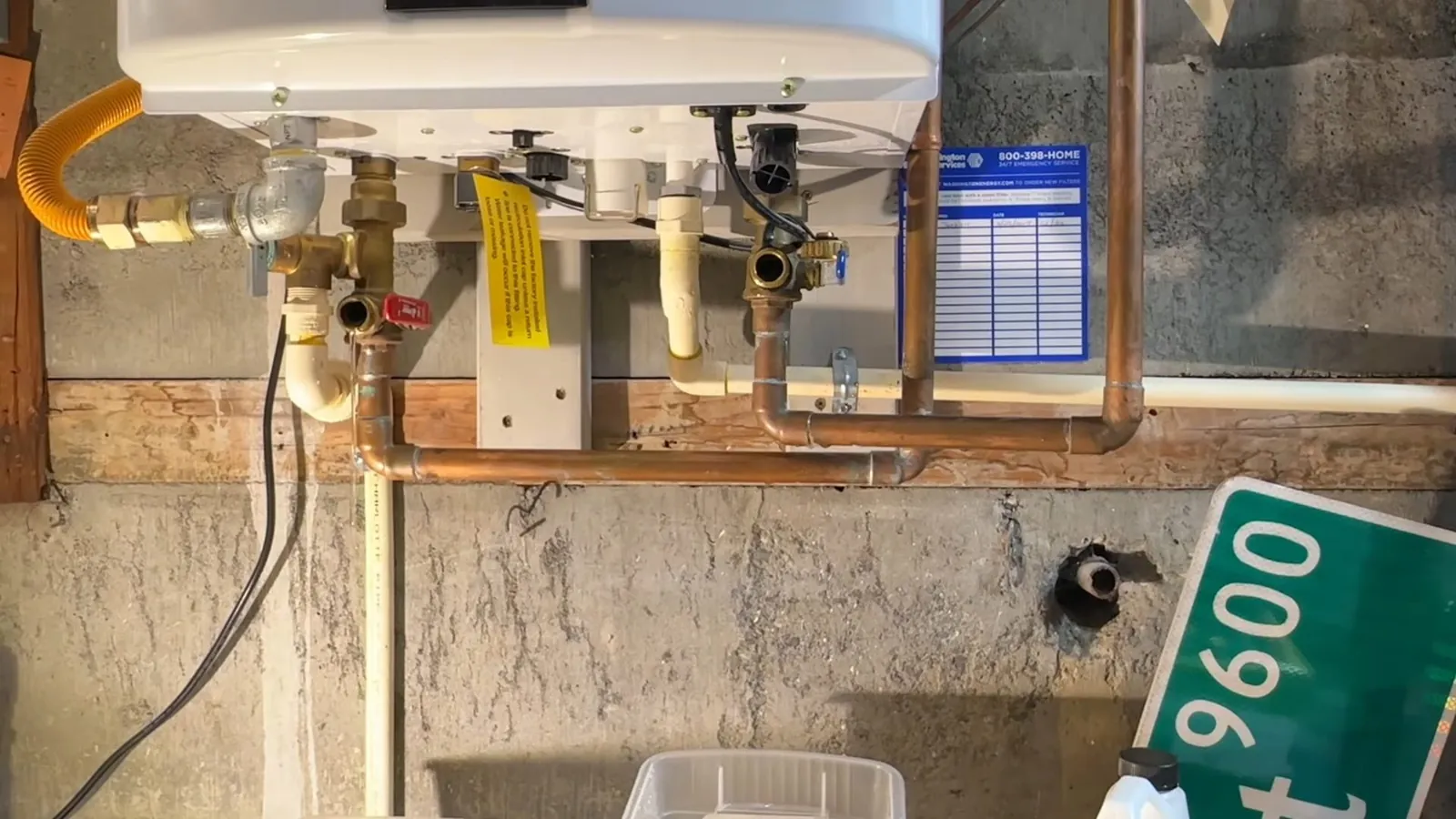
A tankless heater heats water as it flows instead of storing it. That removes the standby tank and the risk of a tank failing, but the unit makes demands on the house that a tank does not.
| Question | Why it matters |
|---|---|
| How many outlets run at once? | Each unit has a maximum flow. Two showers and a dishwasher can exceed a small unit. |
| Gas or electric? | Gas units need a large gas line and a vent. Electric units can need a very large circuit. |
| Is there room on the wall and a route for the vent? | Wall-mounted units need clearance and venting through a wall or roof. |
| Is the existing tank being replaced? | The old tank location may not suit the new unit. |
If the question is whether to keep a storage tank, see replacing with another tank for the tank side of the decision.
The Gas Line Question Behind Most Tankless Quotes
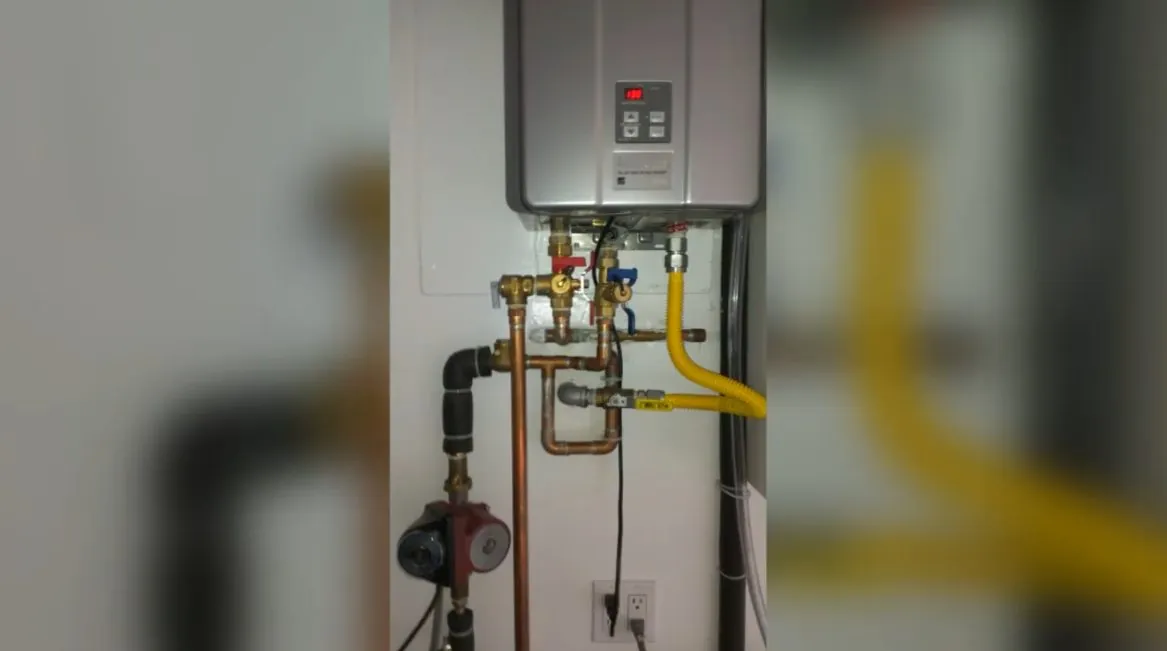
A gas tankless unit burns a lot of gas in short bursts. The pipe that served a tank heater is often too small to feed it.
Ask the plumber whether the gas line needs to be upsized and whether the gas meter and supply can carry the added load. Atmos Energy serves gas in the area, and the plumber should confirm capacity with the utility if there is doubt.
A smell of gas at any time means leaving the house and calling 911, then Atmos Energy on 866-322-8667. See sizing and testing the gas supply line for the piping side of the job.
Call and describe what you see.
Call (833) 840-2034Electric Tankless: Check the Panel First
Electric tankless units draw heavily when they run. A whole-house unit may need more circuit capacity than an older panel has to spare.
- Ask the plumber or an electrician to check the panel before you choose a unit.
- Ask what circuit size the unit requires.
- Ask whether a smaller point-of-use unit near one fixture would do the job instead.
Electrical work is outside plumbing. Expect an electrician for any new circuit.
Undersink and Point-of-Use Units
A small tankless unit under a sink heats water for one fixture. It suits a kitchen or bathroom that is far from the main heater and waits too long for hot water.
These units have limits. They serve one fixture, and they need an outlet or circuit nearby. Ask what flow rate it delivers and whether a second fixture can share it.
A point-of-use unit is not a whole-house replacement. It is useful when the issue is distance, not capacity.
Descaling and Maryville Water
The City's 2023 water quality report gives a 2022 annual average hardness of 60.1 mg/L, about 3.5 grains per gallon, classed as moderately hard. Scale builds up inside a tankless heat exchanger over time.
Most manufacturers call for periodic flushing with a descaling solution. Ask the plumber for the manufacturer's schedule for your unit, and whether the quote includes isolation valves, which make flushing straightforward.
The 2026 report does not list hardness, so the 2022 figure is the latest one on record.
Flow Rate in a Cold Month: Why the Spec Sheet Is Not the Whole Story
A tankless unit's rated flow assumes a certain temperature rise, which is the gap between the incoming water and the temperature you set. Colder incoming water means a bigger rise, so the unit delivers less flow at the same setting.
Ask the plumber for the unit's flow at a winter temperature rise, not only the headline number, and whether two showers at once will still work in January.
Tell the plumber the heaviest demand you expect: a shower, a soaking tub and a dishwasher running together. That is the load the unit has to meet.
Condensate, Air Intake and Other Upkeep
High-efficiency gas units produce condensate that has to drain somewhere. Ask where the condensate line will run and how it will be kept from freezing or backing up.
Ask what the manufacturer calls for beyond descaling, such as checks of the air intake and the vent. A unit that is checked on a schedule gives fewer surprises than one that is ignored for years.
Error Codes, Cold Water Sandwiches and Other Common Faults
- An error code on the display: note the code and the model. It tells the plumber whether to expect an ignition, flame, venting or sensor fault.
- Hot water that turns cold and then hot again: often a flow or setting problem. Describe when it happens.
- Water that stays lukewarm: scale or a failing component. Tell the plumber when the last flush was.
- Low flow at one fixture: often a clogged aerator, not the heater.
These are patterns, not diagnoses. Ask the plumber what the code or symptom means for your model, and what part is involved.
Permit and Venting in Maryville
The City fee schedule lists a plumbing permit item for each water heater and vent. A tankless install adds venting and, for gas units, gas piping, so both belong in the permit conversation.
Fees double for work started before the permit, except where the work corrects an immediate hazard and the application is filed by the next business day. Ask who files it. Codes Enforcement answers permit questions at 865-273-3500.
Source: City of Maryville building fee schedule (effective July 1, 2017; confirm current fees with the City).
Call and describe what you see.
Call (833) 840-2034What a Tankless Quote Should Include
- The unit's make, model and maximum flow rate.
- Gas line sizing or electrical circuit work, and who does it.
- Venting materials and route.
- Isolation valves for flushing and the manufacturer's descaling advice.
- The permit and final inspection.
- Warranty terms in writing.
Cold Showers Now Versus a Planned Upgrade
| Needs attention today | Plan it |
|---|---|
| A tankless unit shows a fault and gives no hot water | Replacing a working tank with a tankless unit |
| A leak at the unit or its fittings | Adding a point-of-use unit for a distant fixture |
| A gas smell near the unit | Descaling a unit that still works |
If a tank heater is the one failing, the tank-side page is tank water heater repair.
Questions About Going Tankless? Call and Ask
Have the fuel type, the current heater's location and any error code ready.
Call (833) 840-2034