
Leak detection in Maryville, Tennessee
Leak Detection in Maryville, TN: Hidden Leaks, Meter Tests and Early Warning Signs
A meter that moves, a bill that jumps or a stain that appears means water is going somewhere it should not. This page helps you confirm the leak, narrow it down and know what a plumber should hand back.
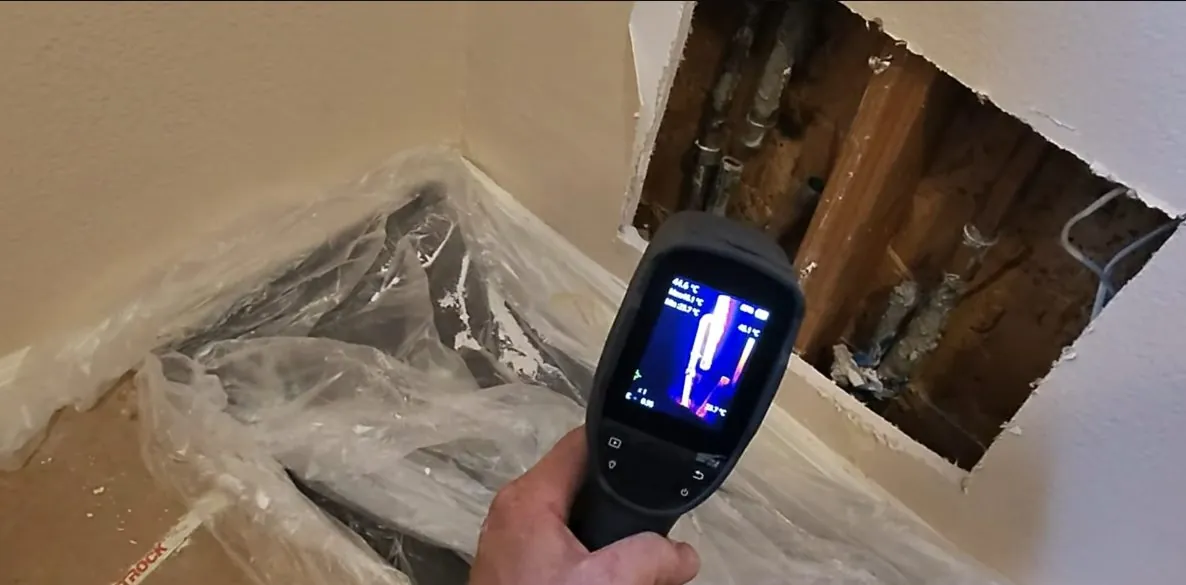
Signs of a Leak You Cannot See
Most leaks announce themselves quietly. By the time a stain spreads, the water has been escaping for a while.
- A water bill that rises with no change in how you live.
- The sound of running water when every fixture is off.
- A damp, musty smell in a closet, cabinet or basement.
- Paint that bubbles or drywall that softens.
- A warm spot on a floor, or a patch of lawn that stays wet or green in dry weather.
- Low water pressure that has no other explanation.
Any one of these is a reason to check, not proof of a leak. Together they tell you where to start.
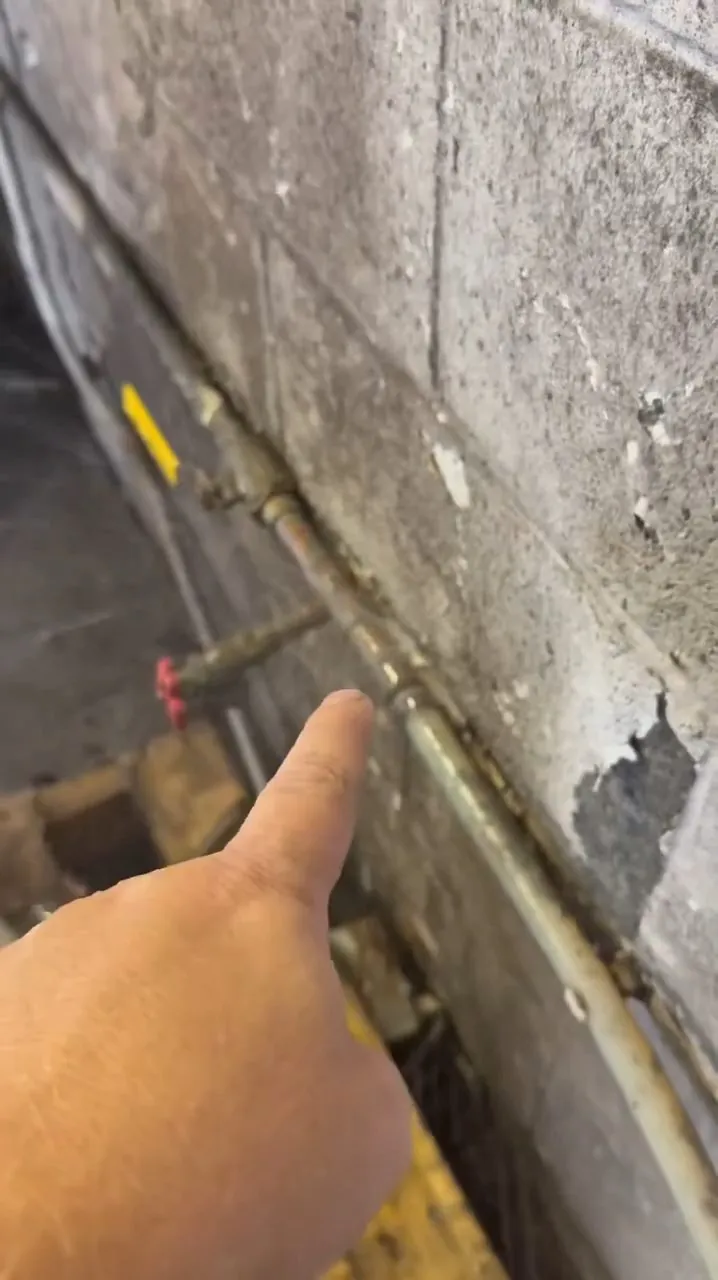
The Meter Test: What It Proves and What It Does Not
- Turn off every fixture and appliance.No dishwasher, washer, ice maker or irrigation cycle running.
- Read the meter.Note the numbers, and the small leak indicator on the dial if there is one.
- Wait fifteen minutes and read it again.Do not use any water in between.
- Compare.If the reading moved or the indicator spins, water is escaping somewhere after the meter.
Maryville's Water and Sewer rules define the customer's water line as the pipe from the meter to the building, so a leak after the meter is on the customer's side of that line. The rules do not say who pays for a repair, so confirm with the City.
The test proves a leak exists. It cannot say whether the leak is in the yard, in a wall or under a floor. That is the next step.
Source: City of Maryville Water and Sewer Rules (2019 edition), section 2.0 definitions.
Call and describe what you see.
Call (833) 840-2034Narrowing the Leak Without Tools
If the meter moved, shut off the house's main valve and read the meter again. If it still moves, the leak is between the meter and the valve, which is the yard side. If it stops, the leak is inside the house.
Inside the house, close the individual stop valves to the toilets and sinks one by one while watching the meter. A fixture whose valve stops the movement has the leak. A water heater or a softener loop can be isolated in the same way where valves exist.
These checks use only valves you can reach. They cannot find a leak inside a wall or under a slab, which is where equipment comes in.
How a Plumber Pinpoints a Hidden Leak
Listing equipment does not tell you anything. What matters is what each method can find.
| Method | What it finds | Limit |
|---|---|---|
| Acoustic listening | The sound of water escaping from a pressurized pipe | Quiet leaks and noisy surroundings make it harder |
| Thermal imaging | A temperature difference where water cools or warms a surface | Shows a damp area, not always the exact pipe |
| Moisture meter | Wet drywall, wood or subfloor | Confirms moisture, not its source |
| Pressure testing | Whether an isolated section of pipe holds pressure | Does not locate the leak by itself |
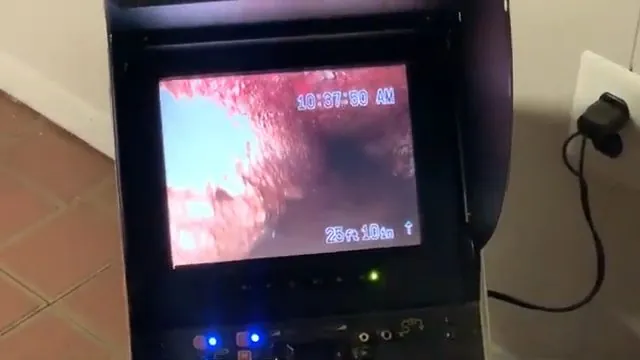
| Drain camera | Damage inside a drain or sewer pipe | Only helps for leaks in waste lines |
Ask the plumber which method they used, what it showed and how sure they are of the location. A good answer comes with a mark on the wall or floor.
Where the Leak Might Be
Inside walls and ceilings
Supply lines and drains run through walls. A ceiling stain below a bathroom often traces to the shower or a supply line above. See bathroom leak sources for how that is tested.
Under a concrete floor
If your home has a slab, a leak in a pipe under it can show as a warm floor spot or a bill that jumps. See testing for a leak under a slab.
In the yard
A soggy strip, a sunken patch or a wet spot that never dries can mean a leak in the water line or an irrigation line. The meter test and the main valve test point toward the yard.
In the drain side
Some leaks are in waste pipes, not supply pipes. They show up as stains and odors, and no meter movement. A drain camera is the tool.
Pinhole Leaks in Copper and Other Slow Leaks
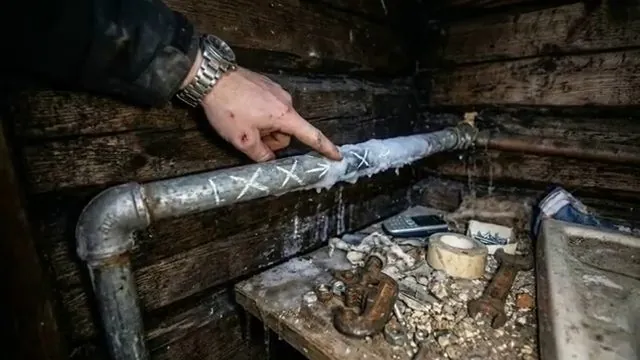
A pinhole leak is a tiny hole in a pipe, often copper, that sprays or seeps. It can run for months behind a wall.
Pinholes have several possible causes, including water chemistry, flow and the pipe's age. A plumber can look at the pipe and tell you which is likely. We found no source that ties Maryville's water to pinhole leaks, so none is claimed.
One pinhole in an otherwise sound pipe is a repair. Several along the same system point toward replacing a run, which is the decision on when repairs stop making sense for pipe.
Call and describe what you see.
Call (833) 840-2034Basement Leaks: Plumbing or Groundwater?
Water in a basement can come from a pipe, a water heater, a washer hose or the ground. The meter test separates them: if the meter moves with every fixture off, a pipe is the likely source. If the meter holds still, the water is more likely coming through the wall or floor. See basement water sources for the groundwater side.
Toilet and Faucet Leaks That Look Like Hidden Leaks
A toilet that leaks silently from the tank to the bowl can move the meter and raise a bill with nothing visibly wrong. A few drops of food coloring in the tank will show color in the bowl without flushing if the flapper leaks. Dripping faucets and a leaking supply line under a sink add up the same way.
Fixture leaks are the simple end of leak hunting. See faucet and sink repair for faucet and valve repairs and bathroom plumbing for toilet parts.
Gas-Adjacent Checks: When a Leak Search Meets a Gas Smell
A water leak search does not test gas piping, and a water meter test says nothing about gas. If you smell gas at any point, leave the house, call 911 from outside, then call Atmos Energy at 866-322-8667, as Atmos advises on its leak safety page. Do not look for the source yourself.
Gas piping repairs happen after the utility has cleared the area. The gas line repair page covers what follows.
Irrigation Lines and Outdoor Leaks
Yard sprinkler lines leak at joints, valves and heads, and the water goes to the soil, not the house. The meter moves even when nothing inside is running.
Turn off the irrigation zones before the meter test. If the meter stops, the irrigation system is the source, and an irrigation specialist or the plumber can locate it. Pool and spa plumbing is a separate specialty, so ask whether the plumber handles it before booking.
The Leak Detection Report You Should Leave With
- Where the leak is, marked and described.
- How it was found and how confident the plumber is.
- What the repair involves, including any wall, floor or yard opening.
- Photos of the leak or the damaged pipe.
- Anything that needs an insurer, a drying crew or another trade.
A written finding is useful to an insurer. The City notes that flooding is not covered by a homeowner's policy, and a plumbing leak is a different event. Ask your insurer how a hidden leak is treated and what it wants documented.
Source: City of Maryville flooding and floodplain information.
Leak Detection Questions Homeowners Ask
Can a plumber find a leak without cutting into the wall?
Often yes. Listening equipment, thermal imaging and moisture meters narrow the location first, and the opening is cut only where the evidence points. The tool table above shows what each method can and cannot find.
How do I know whether a high water bill is a leak?
Run the meter test. If the meter moves with every fixture off, water is leaving somewhere. A bill that rose without the meter moving points elsewhere, such as a change in use or a billing issue to raise with the utility.
Does insurance cover leak detection?
That depends on the policy and the cause of the leak. Ask the insurer before work starts, and keep the report, photos and receipts.
After the Leak Is Found
Finding the leak is the diagnosis. The repair depends on what and where it is. A burst or split pipe is a split or burst supply pipe, and water that has already soaked a wall or floor needs drying and moisture control.
Ask the plumber to put the repair path in writing and to say whether the leak is likely to have damaged anything you cannot see.
Meter Moving With Everything Off? Call
Say what the meter did and where you see signs of water.
Call (833) 840-2034