Water heater repair in Maryville, Tennessee
Water Heater Repair in Maryville, TN: Leaking Tanks, Cold Showers and Pilot Trouble
A puddle around the tank or a shower that stays cold sends most homeowners looking for a plumber. This page helps you work out what is failing, what is safe to check yourself, and whether the heater is worth repairing.
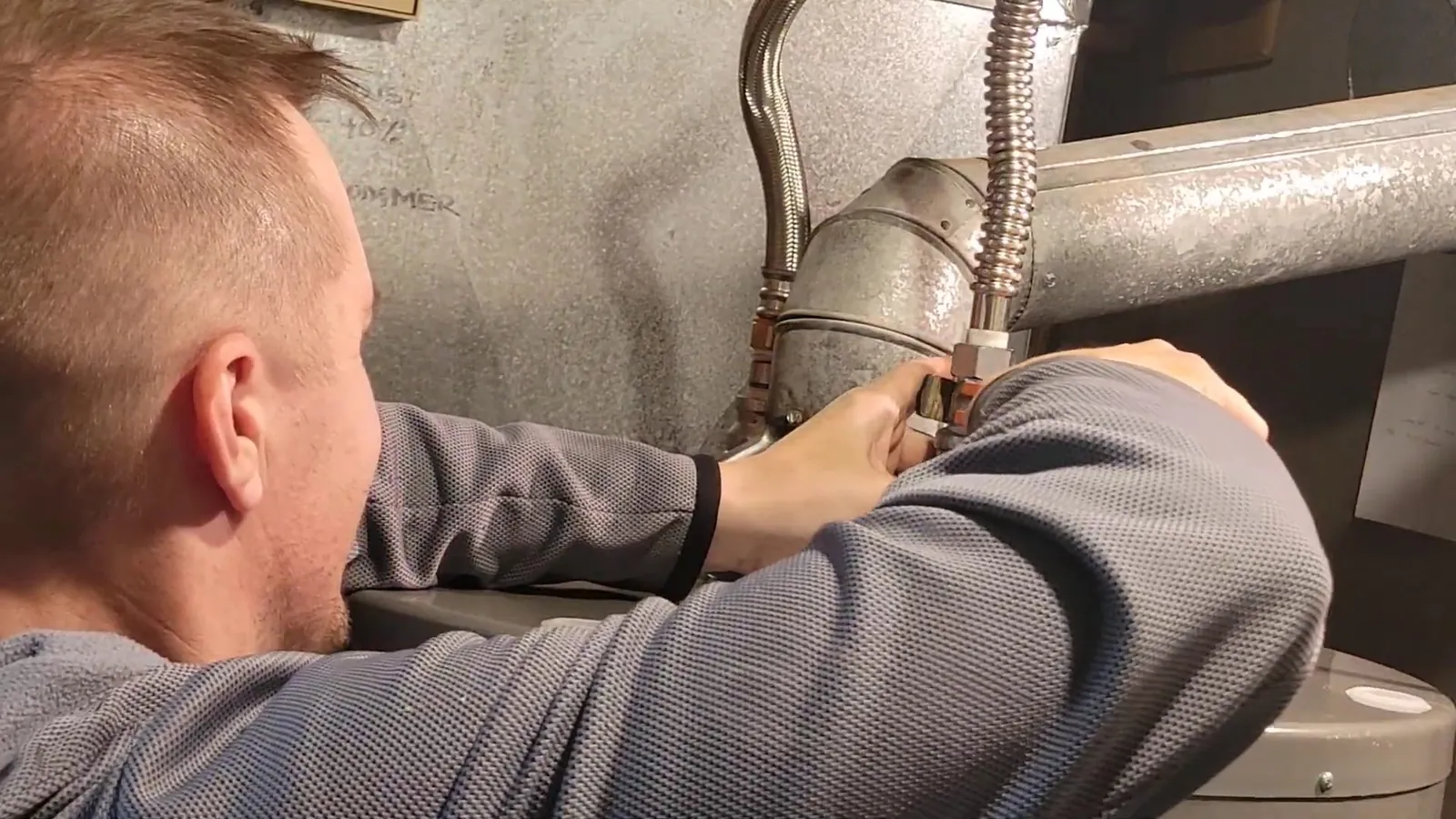
Is the Water Heater Leaking, or Is Something Attached to It?
Water near a heater is not always the tank. Fittings, valves and the discharge pipe leak first, and those are smaller fixes than a failed tank.
Dry the floor, then watch with a flashlight for a few minutes. Where the new water appears tells you most of what you need to know before anyone arrives.
| Where the water shows up | What it usually means | Repair or replace |
|---|---|---|
| Drips from a pipe fitting or valve on top | A loose or worn connection or valve | Often repairable |
| Water from the discharge pipe beside the tank | The pressure relief valve is opening, sometimes from high pressure or a failed expansion tank | Needs diagnosis, see the pressure section below |
| Beads of moisture on the outside of the tank | Condensation, which dries and is not a leak | No repair needed |
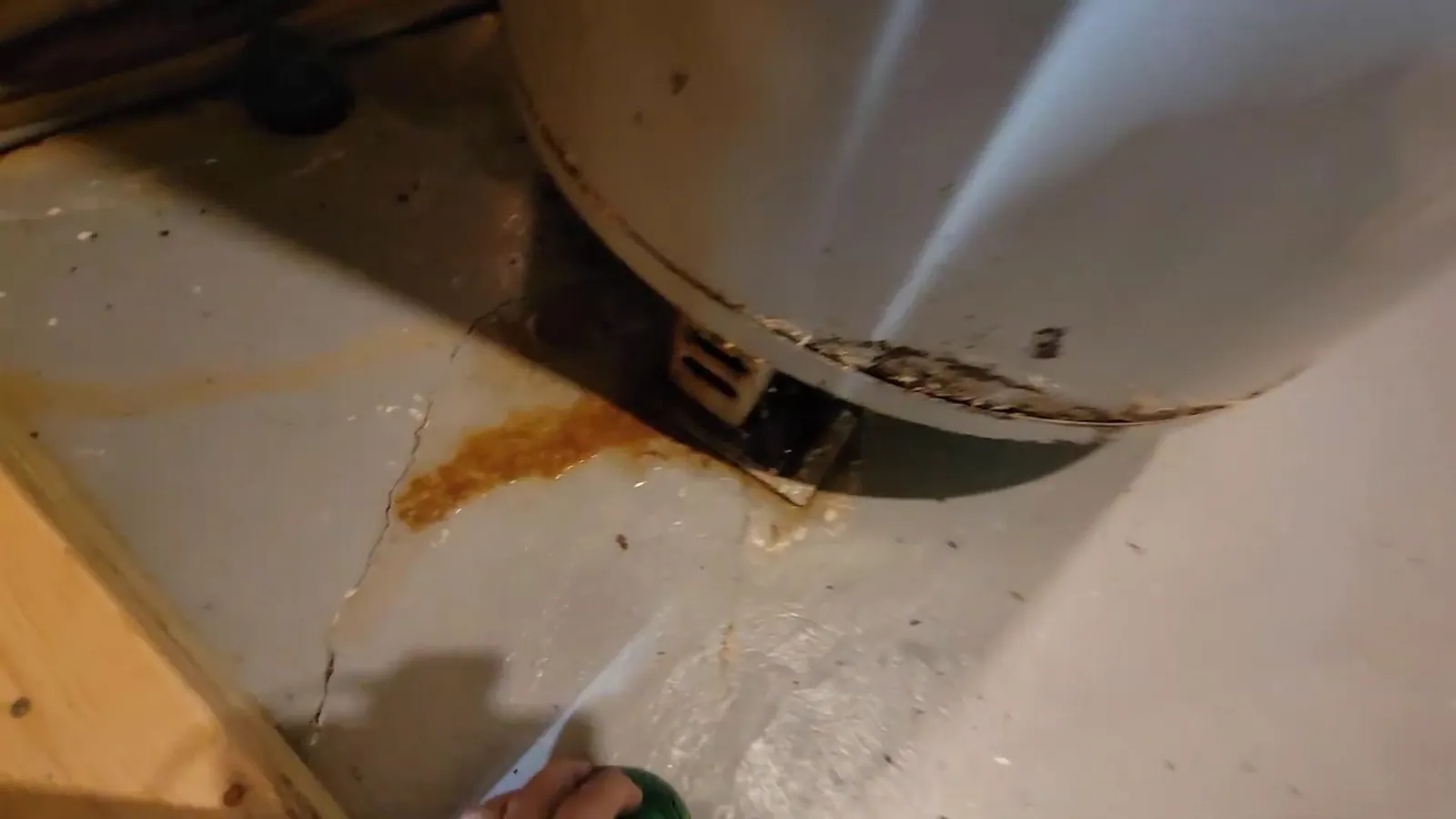
| A pool under the tank, rust at the seam or base | The tank itself has failed | Replacement, because a tank body cannot be patched |
A leak from the tank body is the one result that sends you to replacement. For that job, see replacing a tank water heater.
What to Do Before the Plumber Gets There
These steps are safe for a homeowner and use no tools.
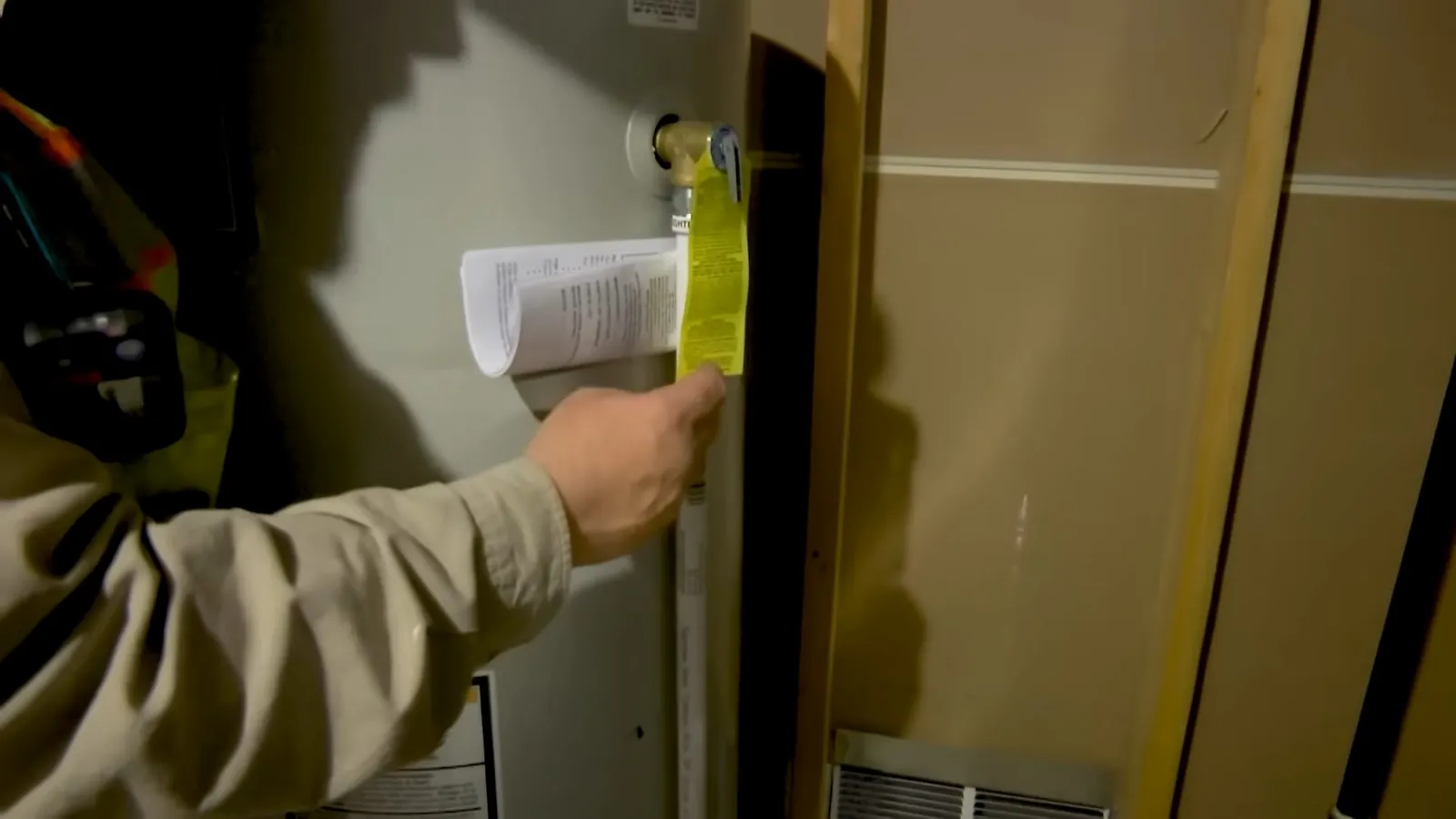
- Close the cold-water valve.It is on the pipe feeding the top of the tank. Closing it stops new water from reaching a leak.
- Turn off the heat source.For an electric heater, switch off its breaker. For a gas heater, the label on the tank shows how to turn the gas control to pilot or off. If you cannot reach it or are unsure, skip this step.
- Leave if you smell gas.Do not touch switches. Get out, call 911, then call Atmos Energy on 866-322-8667.
- Photograph the label and the leak.The label lists the model and serial number, which tell the plumber the age and the parts.
Call and describe what you see.
Call (833) 840-2034No Hot Water: Pilot, Element or Thermostat?
Gas and electric heaters fail in different ways, so start by knowing which one you have. The label and the fuel connection tell you.
- Gas heater: a pilot light that is out, a worn thermocouple, or a gas control valve that has stopped working. A pilot that will not stay lit is a job for a plumber, not repeated relighting.
- Electric heater: a tripped breaker, a failed heating element or a thermostat that no longer switches. Resetting a breaker once is reasonable. A breaker that trips again needs a plumber or an electrician.
- Hot water that runs out fast or never gets hot: this pattern helps the plumber decide which part to test first, so note when it happens.
These checks tell you what kind of failure to expect. They cannot tell you whether the heater is worth fixing, which is the next decision.
Repair or Replace: Five Questions to Ask
- How old is it? The serial number on the label encodes the build date, and the manufacturer's website decodes it.
- Is the tank itself leaking? If so, repair is off the table.
- Has it been repaired before? A second or third repair on an old tank points toward replacement.
- Is there rust at the base or in the hot water? Tell the plumber, because it can mean the inside of the tank is corroding.
- Is the repair quote in writing? It should name the part and the labor.
A young heater with one failed element is a better repair bet than an old heater with a new part quote. Ask the plumber which case yours is, and why.
Maryville requires a permit for water heaters
The City fee schedule lists a plumbing permit item for each water heater and vent. Fees double when work starts before the permit, with an exception for work that corrects an immediate hazard if the application is filed by the next business day.
So if a tank fails on a weekend and a replacement cannot wait, ask the plumber who files the permit and when. Codes Enforcement answers permit questions at 865-273-3500.
Source: City of Maryville building fee schedule (effective July 1, 2017; confirm current fees with the City).
Pressure Relief Valve and Expansion Tank Trouble
A relief valve that drips, or pipes that bang when a faucet shuts, can mean the water pressure is too high. Heating water makes it expand. In a home where that extra water has nowhere to go, an expansion tank absorbs the increase.
When the tank's air side fails, the pressure has nowhere to go and the relief valve may open. A plumber can test the expansion tank and measure the home's water pressure. Ask for the pressure reading in the notes.
Never cap or plug a relief valve or its discharge pipe. It is a safety device, and a leaking one is a repair to request, not a drip to stop.
What Maryville Water Does Inside a Tank
The City of Maryville draws its supply from the Little River and treats it with chlorine. Its 2023 water quality report gives a 2022 annual average hardness of 60.1 mg/L, about 3.5 grains per gallon, which the City classes as moderately hard.
Moderately hard water builds scale slowly, but every tank collects sediment at the bottom. When a heater is serviced, ask whether the tank was flushed and whether the anode rod was checked. Those two steps are what slow a tank's decline.
Sources: City of Maryville 2023 water quality report and the City's 2026 water quality report, which does not list hardness, so the 2022 figure is the latest on record.
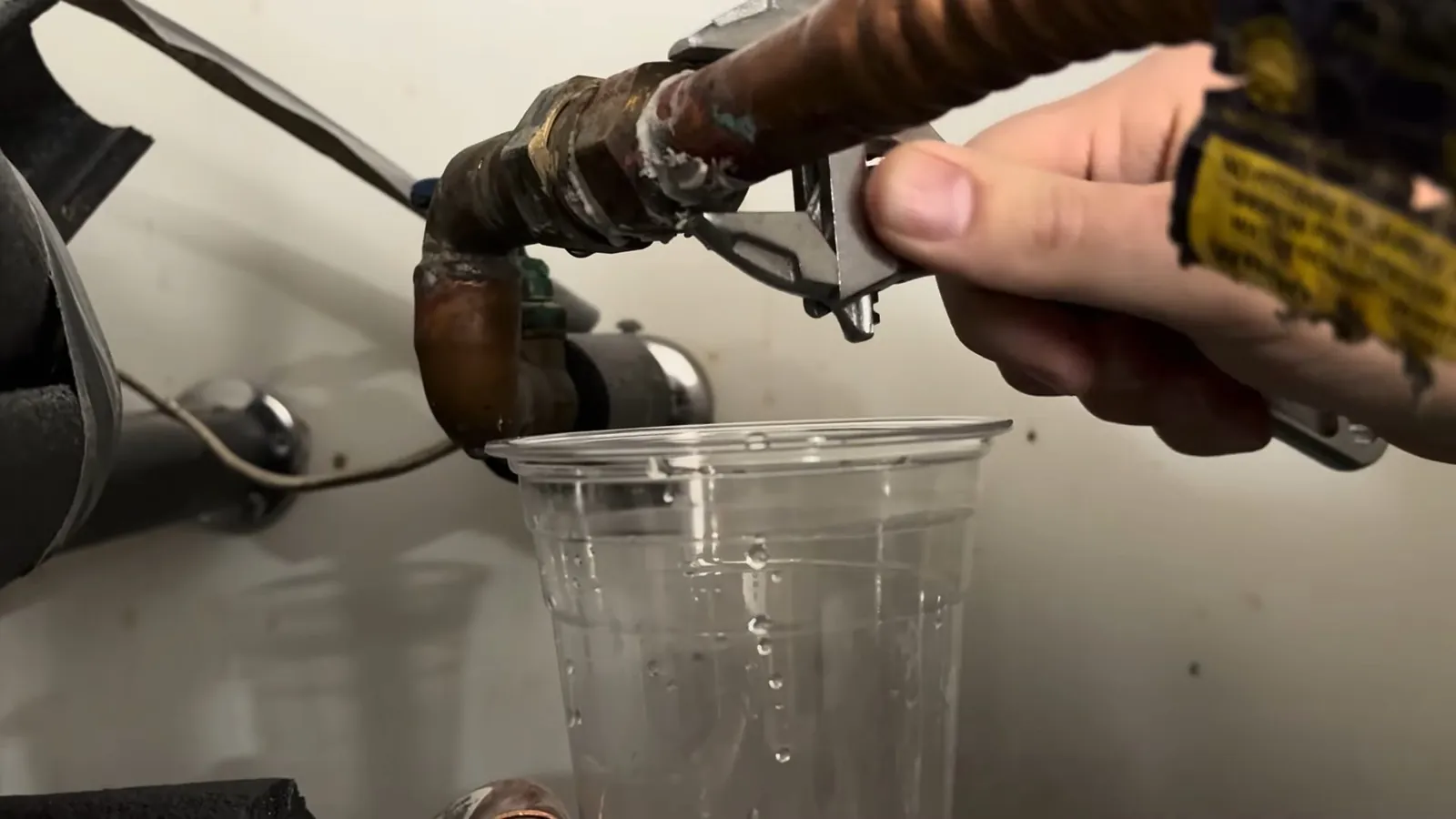
Flushing a Water Heater: What It Does and When to Ask for It
Sediment settles at the bottom of a tank over time. A flush drains the tank through its drain valve to carry loose sediment out. It is most useful when a heater rumbles, heats slowly or runs out of hot water sooner than it used to.
A flush involves hot water, so the heater should be set to off or pilot and the cold supply closed first. If the drain valve is stuck or crusted, forcing it can start a leak, so let the plumber handle it. Ask whether the anode rod will be checked at the same visit.
Small undersink and point-of-use heaters have different service steps. See undersink and point-of-use units on the tankless page.
Gas, Insurer and Drying Crew: Others Who Own Part of a Heater Problem
- A gas smell: Atmos Energy and 911 come first, and the gas piping repairs follow after the area is cleared. The gas company's guidance is on its leak safety page.
- Water on the floor after a leak: your insurer and a drying crew own the damage, which is what water removal after a leak covers.
- A tankless unit: on-demand heaters fail differently, and tankless units has its own page.
- A breaker that keeps tripping: the panel is an electrician's job.
- No water at any tap: if neighbors are dry too, the problem is on the City side, not the heater.
What to Ask the Plumber to Document
Ask for these in the notes or the quote. They protect you whether you repair or replace.
- What failed, with a photo of the part if it was removed.
- The heater's age from the serial number.
- The water pressure reading, especially after a relief valve or expansion tank problem.
- Whether a permit is part of the work and who files it.
- A written scope listing parts and labor.
Call and describe what you see.
Call (833) 840-2034When a Leaking Water Heater Cannot Wait
| Call now | Can wait for a scheduled visit |
|---|---|
| The tank is leaking steadily | Lukewarm water with no leak |
| Water or steam comes from the relief valve discharge | A drip at a fitting you have already shut off |
| You smell gas or something burning near the heater | Popping or rumbling noises from the tank |
| The floor around the heater is wet and spreading | A heater that works but is many years old |
A plumber can sort a gray-area situation in a minute or two. When in doubt, call and describe it.
Ready to Talk Through the Heater Problem?
Say what you see, give your address and ZIP code, and ask what the plumber needs to look at.
Call (833) 840-2034